
Major General Amir Hatami, commander-in-chief of the Iranian Army, condemned the attack on the vessel, one of the country's newest warships, which occurred while it was returning from a military exercise.

Russian President Vladimir Putin is actively working to de-escalate the escalating crisis in the Gulf, engaging with regional leaders following Iran's retaliatory strikes on US facilities after joint US-Israeli strikes against Iran.

US President Donald Trump hinted at the possibility of the US seizing Iran's key oil export hub on Kharg Island, suggesting it could be done with minimal resistance. He also expressed his desire to take Iran's oil resources, while indicating potential negotiations and a possible deal with Iran.

Equipped with advanced weaponry, the HMS Anson is fitted with "Tomahawk Block IV land-attack missiles" with a range of 1,600 km and "Spearfish heavyweight torpedoes," providing formidable offensive capabilities.

'Despite the large number of missiles and drones we have already launched, we still possess reserves and missile cities whose doors have not yet been opened,' says Iran's Consul-General Saeid Reza Mosayeb Motlagh.

The Congress party has criticised Prime Minister Narendra Modi's diplomatic efforts following the ceasefire agreement between the US and Iran, facilitated in part by Pakistan. The party claims this development undermines Modi's strategy and exposes his perceived failures in foreign policy.

Amidst ongoing conflict, Iranian President Masoud Pezeshkian signals a potential de-escalation by apologising to neighbouring countries while firmly rejecting US President Donald Trump's demand for unconditional surrender.

Economist Jeffrey Sachs saw Gulf nations' decision to partner with the US through the Abraham Accords as an "invitation for disaster" as it made them more dependent on American protection.

The Indian embassy in Tehran has earlier stated that it is facilitating the safe movement of nationals who wish to leave Iran.

Both sides have now revealed a preference for escalation over strategic defeat, and each new provocation narrows the space for the next pause. The Touska seizure, Iran's refusal to negotiate under blockade, Israel's strikes on Iranian oil infrastructure -- all of these add up to an increasingly untenable situation. This makes the wild card -- Trump and his motormouth -- more consequential than ever, notes Prem Panicker in his must read blog on the Iran War.

'The next two to three weeks will not be decided in Washington.' 'They will be decided in Tehran, in whatever calculation Iran makes about the costs of continued resistance against the costs of appearing to have yielded.'
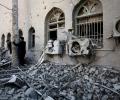
The logic of war plus the gathering storms in US politics as the midterms loom large leave him with no real alternative but to negotiate, points out Ambassador M K Bhadrakumar.

Donald Trump has warned Iran to open the Strait of Hormuz within 48 hours or face military action, escalating tensions amid regional conflict and impacting global oil supplies.
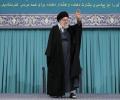
Following US and Israeli strikes in Iran, reports have surfaced questioning the wellbeing of Supreme Leader Ayatollah Khamenei, prompting a swift denial from Iranian officials and condemnation of the military action.

Tensions escalate at the UN Security Council as the US and Israel defend their military actions against Iran, while Iran condemns the strikes as war crimes, raising fears of a wider Middle East conflict.

'On behalf of the Islamic Republic of Iran, I express gratitude and appreciation for my dear brothers HE Prime Minister of Pakistan Sharif and HE Field Marshal Munir for their tireless efforts to end the war in the region.'

'To suddenly give the impression of taking a position that is hostile to Iran, or, at least, not friendly to Iran, is not a good thing.'
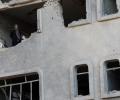
A spokesperson for the Central Khatam al-Anbiya Headquarters said that Iran's armed forces are prepared to intensify their response if aggression continues.

The core issues to be settled -- access to Hormuz, Israel's aggression in Lebanon, the question of Iran's nuclear programme, sanctions relief and compensation -- are thorny enough to require weeks of patient negotiation. The most likely outcome of the opening sessions is that both sides take the measure of each other, establish what is and is not negotiable, and return home without having broken anything. That would count as progress.

The 'rescue' operation occurred within kilometres of Iran's underground tunnel complex at Isfahan, assessed by the IAEA and US intelligence as holding a substantial portion of the country's 60 per cent enriched uranium stockpile. Retired senior US military officers have highlighted that the mission's footprint -- hundreds of special operators, multiple heavy-lift aircraft deep inside Iran -- appears outsized for recovering a single airman. Prem Panicker continues his must read blog on the Iran War.

The question is whether the clocks allow enough time for two deeply mistrustful sides to get there, and whether the surface calm holds long enough for the paddling to produce something before the ceasefire ends on April 22, notes Prem Panicker in his must read blog on the Iran War.

'As result, Netanyahu 'convinced' Trump to go to war with the help of overoptimistic Israeli intelligence assessments, essentially explaining to him that they only need to bomb Iran for 3-4 days, and the regime would then collapse.' 'Rather unsurprisingly, Netanyahu is ever since blaming his own intel service for the entire operation failing.'

The question is no longer whether the war will expand. It has. The next few days will tell us whether the war stabilises around Hormuz or whether the Strait itself becomes the trigger for a far larger rupture. What to watch for over the next 48 hours is simple: Any move by the US toward direct naval control of the Strait; any credible Iranian attempt to disrupt or mine shipping lanes and, critically, whether energy infrastructure in the Gulf continues to be targeted.If those lines are crossed in tandem, the war will no longer be containable within the region.

The Islamic Revolutionary Guard Corps (IRGC) has declared the commencement of its 27th offensive under Operation True Promise 4, targeting American and Israeli positions in response to what it termed a new wave of 'unprovoked US-Israeli aggression against the Islamic Republic', Iranian state broadcaster Press TV reported.

Trump may strike. He may announce productive talks and extend again. He may do both at the same time. Iran will not open the Strait on someone else's terms, so no matter what happens, that problem will remain unsolved. And the IRGC will still be collecting its $2 million toll from every ship bold enough to ask permission to pass.

In a further escalation of the assault on the heavily fortified site, a missile strike also reportedly targeted the "helipad" at the embassy, as documented by Al Jazeera.

The US-Israeli military campaign, dubbed "Operation Epic Fury" by Washington, has entered its third day, with US President Donald Trump stating that operations would continue "until all of our objectives are achieved."

Taking Kharg would give the US control over virtually all of Iran's oil exports and thus provide significant leverage, notes Prem Panicker in his must read daily blog on the Gulf War. It would also put American troops within range of Iran's remaining missiles, drones, and artillery on a piece of real estate that is just eight square miles in size, and just 15 miles from the Iranian mainland.

'Without ground troops the US will not be able to oust the Iranian Islamic regime. Political change does not happen just by using bombs or planes.'

The delegations from the US and Iran head to Islamabad on Friday, carrying a ceasefire that is already fraying, a Strait that is technically open and practically closed, and a negotiating agenda that would challenge even parties actually negotiating in good faith, which these groups are not. Prem Panicker continues his must read blog on the Iran War.

Iraq's Kurdistan Regional Government (KRG) on Saturday confirmed a drone strike targeting the residence of Kurdistan Region President Nechirvan Barzani in Duhok amid escalating tensions in West Asia, triggering a sharp blame game between the United States and Iran.

President Trump asserts the US military has decimated Iran's forces and no longer requires assistance from NATO allies to secure the Strait of Hormuz, despite earlier requests for support.
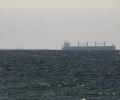
The UK Maritime Trade Operations issued a warning noting that the incident took place approximately 15 nautical miles north of Sharjah.
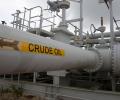
Crude oil prices experienced a significant drop following the announcement of a US-Iran ceasefire and the reopening of the Strait of Hormuz, leading to heavy selling by traders.

Trump has said he would be present at the signing ceremony in Islamabad. Don't be surprised if the Pakistani hosts make it a grand event in the geopolitics of the region. Trump would love that, notes Ambassador M K Bhadrakumar.

The United States, which entered this war in expectation of a short, sharp win along the Venezuela model, is now preparing for deeper involvement in a conflict it does not fully control, without the allies it typically relies on, against an adversary that is not behaving as expected, in a global environment that is already absorbing economic shock. Prem Panicker continues his must read daily blog on the Gulf War.

R Praggnanandhaa leads a fearless new generation at the Candidates 2026 as veterans face a shifting chess landscape ahead of a world title clash.

The targeted eastern area is of immense strategic importance, as it is where the "majority of the country's oil resources are located."

Egypt, Pakistan, Saudi Arabia and Turkey met in Islamabad in what analysts say is the formal opening of a new diplomatic formation that could reshape the post-war regional order. Their immediate goal is a ceasefire; their larger ambition is to ensure that neither Iran nor Israel emerges from this war in a dominant position. Pakistan's foreign minister then flew directly to Beijing and mooted a Chinese role as guarantor of any eventual agreement. Prem Panicker continues his must read daily blog on the Gulf War.

As days turn into weeks and America loses more planes, as the destruction of trillions of dollars worth military assets piles up, and dead bodies of soldiers return in ever greater numbers in coffins, Trump will have to answer some very difficult questions to save his presidency, notes Ambassador M K Bhadrakumar.
